

Model Context Protocol (MCP)
2025-11-18 08:36:17
MCP allows AI systems to dynamically discover and interact with available tools. Supporting continuous and bidirectional communication between models and external systems.
Model Context Protocol (MCP), @AnthropicAI is an open standard developed by. It is a framework that fundamentally changes how AI models connect with external data sources and tools. Although its impact seemed limited at first, its adoption earlier this year by Gate and @OpenAI accelerated its popularization process. MCP is often compared to a “USB-C port for AI agents” — it provides a standardized way to connect to various tools and data sources, simplifying the interaction between AI and external resources.
Instead of requiring developers to build separate integrations for each data source or tool, MCP establishes a standardized communication protocol between AI models (clients) and data or tool providers (servers). This allows models to access content repositories, business tools, and development environments, helping them produce more relevant and functional responses.
At its core, MCP aims to overcome the limitations of Large Language Models (LLMs), which are isolated from real-time data and unable to act directly in the external world. MCP removes these barriers by enabling AI systems to dynamically discover and interact with available tools, establishing continuous two-way communication between models and external systems. This creates a foundation for more powerful and efficient systems, especially in fields like DeFi, where autonomous AI agents are actively used.
How Does MCP Optimize AI Agents?
MCP significantly improves how AI agents process and interact with real-time data in the DeFi space. Through MCP, AI agents can access dynamic external data streams — such as market data via relational databases and APIs — enabling them to internalize the latest developments and make more informed decisions.
Agents capable of integrating real-time multi-source data can analyze complex data points and rapidly adapt to changing market conditions for tasks such as liquidity provision — a critical capability in fast-paced environments like DeFi.
MCP is not limited to data intake; it also enables AI agents to interact with tools to perform transactions. Agents can not only retrieve data from external systems but also send actions back such as executing smart contracts or updating liquidity positions. This allows DeFi strategies to be executed in a fully autonomous manner, making agents more effective and efficient.
By eliminating the need to develop separate integrations for each tool or data source, MCP simplifies the process and accelerates the adoption of AI-powered DeFi solutions. As a result, agents can adapt to new opportunities more quickly, scale more easily, and respond instantly — enhancing the overall efficiency of DeFi operations.
However, MCP has limitations as well as strengths. While MCP allows agents to exchange data with external systems, it does not provide a suitable structure for agents to coordinate or communicate directly with each other. Unlike tools, agents are not designed to operate through fixed APIs based on rigid commands. Agents are inherently flexible and often interact through natural language in scenarios where they share a common context.
The solutions addressing this need will be detailed in the next section, titled “Accelerating the Need for Agent Swarm Coordination through MCP.”

Web3 and Blockchain
Web3 provides a natural foundation for innovation and is increasingly becoming a testing ground for AI systems and methodologies. This is also true for MCP. MCP enhances AI-blockchain integration, enabling artificial intelligence to interact effectively with decentralized applications. Thus, it unlocks new efficiencies within the Web3 space — as has been frequently emphasized recently. Several exciting projects within the Web3 ecosystem have begun adopting MCP. One of them is:
It is the leading Rust framework for AI agents in Web3. Developed with MCP support, Ryzome has been introduced as a universal application marketplace for agentic AI. Ryzome standardizes communication between AI agents and digital services. This allows AI agents to easily access both Web2 and Web3 services without requiring complex integrations.
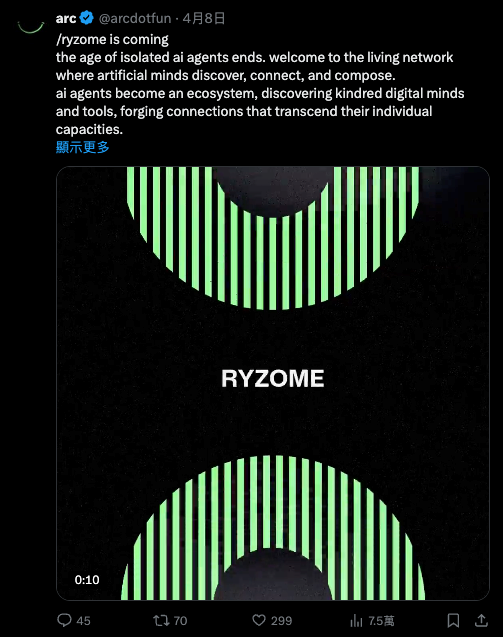
The world’s IP blockchain also recently announced its integration with MCP. This integration aims to make it easier for AI agents to access information about transactions, licenses, and ownership within the ecosystem. It also allows agents to create and transfer IP assets.

These applications, developed by innovative teams in the field, enable LLMs to interact with blockchain data in real time, perform security audits on smart contracts, track token metrics, and facilitate blockchain transactions with proper safeguards.
E-Commerce and Retail
In the e-commerce and retail sectors, MCP transforms how AI agents connect with data sources and tools, improving both operational efficiency and customer experience. Functions such as product search, order tracking, and price recommendations make operations easier and the shopping experience smoother.
The Expanding Reach and Impact of MCP for AI Systems
The rapid adoption of MCP across industries clearly demonstrates its value as a protocol that standardizes interaction between AI agents and external systems. Originally developed as an initiative by Anthropic, MCP has now evolved into an open ecosystem powered by thousands of community-built servers and integrations from major technology companies.
As MCP matures, the following developments are being observed:
Simplified integrations where customized connectors are replaced with standardized interfaces
Enhanced security through protocol-level authentication and access control
A growing developer ecosystem creating custom tools and connectors
Cross-platform compatibility between different AI models and applications
MCP Accelerates the Need for Agent Swarm Coordination
While MCP solves the connectivity problem between individual AI agents and data sources, it does not address the need for coordination among multiple specialized agents. At this point, TheoriqAI steps in.
For the past two years, Theoriq has supported the use of agent swarms (a concept previously referred to as “communities” before the term “agent swarm” became popular). Their developed Theoriq Protocol offers a decentralized, multi-agent framework for AI-powered finance. It establishes a foundation that enables agents to collaboratively execute complex financial tasks, communicate, and cooperate. Built on this protocol, the On-chain Liquidity Supply (OLS) swarm serves as a direct example of financial value generation within the DeFi ecosystem.
In an environment where specialized agents are becoming widespread, each may gain data access through MCP, yet they require coordination “rails” to communicate effectively with one another. Integrating numerous MCP plug-ins into a general-purpose agent will be less effective compared to specialized agents coordinated through the Theoriq Protocol.
While MCP facilitates access to external resources for agents, Theoriq provides the coordination layer in the following ways:
- Enabling inter-agent communication: MCP allows agents to initiate data requests, while Theoriq creates callback mechanisms between agents — providing automatic coordination in cases such as market changes or urgent news.
- Providing coordination mechanisms: Theoriq enables multiple specialized agents to collaborate on tasks such as liquidity provision. Agents can communicate in rich, semantically expressive natural language, whereas MCP operates within a more rigid, narrowly defined API paradigm.
- Creating economic incentives: Unlike MCP, Theoriq employs a token economy, rewarding agent contributions and participation to encourage high-quality collaboration.
- Ensuring secure inter-agent communication: Theoriq’s on-chain and off-chain components enable stronger, verifiable agent-to-agent interactions than MCP provides.
- Facilitating agent discovery and reputation: Agents can discover each other based on their capabilities and past performance, enabling more effective collaboration.
The MCP Agent Tool Layer and Theoric Coordination Layer
The Model Context Protocol serves as a critical infrastructure layer that connects AI agents with data and tools. This connection makes specialized and capable agents more practical and useful.
However, as these agents multiply, the need for coordination among them also increases. Theoriq provides the “communication rails” between agents, addressing the complex requirements of multi-agent systems such as on-chain liquidity provision. Together, MCP and Theoriq form a solid foundation for the evolving agent economy. This synergy enables specialized excellence instead of generalized mediocrity. The result: a more efficient, capable, and trust-minimized AI ecosystem.
All leading AI agent frameworks in Web3 are expected to adopt MCP — just as Rig has done. As these frameworks collaborate to integrate Theoriq for swarm coordination, both MCP and Theoriq are expected to increase in value.
Disclaimer
* Legal Notice 1: This content does not constitute investment advice. It is not intended to promote the buying/selling of digital assets and is for informational purposes only. Crypto assets carry high risks and may be subject to significant price fluctuations. Before making any investment decision, you should assess your own financial situation and make an independent decision.
* Legal Notice 2: The data and charts provided in the article are for general informational purposes only. Although all content is carefully prepared, no responsibility is accepted for possible errors or omissions. The Gate Academy team may translate this content into different languages. No translated article may be copied, reproduced, or distributed without permission.


Related Articles

Beginner
What is HyperGPT (HGPT)?
This article offers an in-depth look into the infrastructure, products, and ecosystem of the HyperGPT (HGPT) project, while focusing on the problems that HyperGPT aims to solve.
2025-05-16 18:10:16
Intermediate
Bitcoin İçin Yeni Bir Başlangıç mı? Nubit, Babylon, Bitlayer Çatışması
Bitcoin’ın teknolojik evriminin kavşağında, karşımızda üç farklı yaklaşım var: Nubit, Bitcoin’ın yerel ölçeklenmesini ve temel değerlerine bağlılığını savunuyor; Babil, çapraz zincir entegrasyonu ve sermaye verimliliğini öne çıkarıyor; Bitlayer ise başarılı modelleri kopyalayarak pragmatik bir yaklaşım sunuyor.
2025-05-16 14:02:46
Beginner
What Are Blockchain Bridges and How Do They Work?
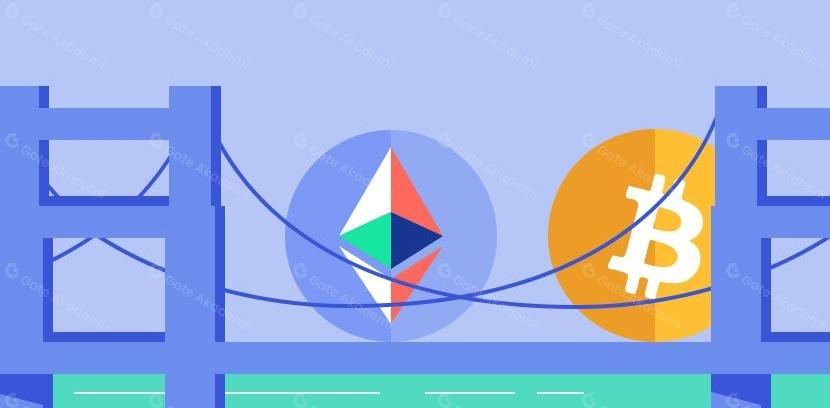
Blockchain bridges are specialized protocols whose function is to connect two blockchains, creating the possibility of transferring assets from one network to another.
2025-11-24 11:26:06