

Weekly Report: Pivotal Developments in Global Finance and the Crypto World
Discover the latest developments in the cryptocurrency markets, standout projects, and emerging investment opportunities in one comprehensive bulletin. Track market analyses, regulatory updates, and key industry movements that define the pulse of the crypto world.
Date: 03.11.2025 – 07.11.2025
Summary
The first week of November 2025 brought several notable developments across global finance and cryptocurrency markets. The Hong Kong SFC authorized licensed exchanges to share their global order books with overseas platforms—an unprecedented step toward liquidity integration. Meanwhile, the European Commission advanced plans to expand ESMA’s powers, laying the groundwork for an “EU-wide SEC” model.
In Turkey, the latest TÜİK data showed the Domestic Producer Price Index (PPI) rising 1.63% monthly and 27% annually, indicating persistent producer inflation. On the corporate side, Tether reported a record-breaking $10 billion net profit and $6.8 billion in excess reserves, reinforcing its financial stability. Strategy Inc. (MSTR) disclosed $69.5 million in stock sales, likely fueling further Bitcoin accumulation.
In the U.S., Senator Cynthia Lummis continues to advocate for a Strategic Bitcoin Reserve, framing Bitcoin as a debt-neutral national asset akin to “digital gold.” Simultaneously, Mastercard, Gemini, and Ripple are collaborating on blockchain-based credit card settlement systems, while U.S. spot Bitcoin ETFs experienced over $2 billion in outflows, marking the second-worst withdrawal streak on record.
Hong Kong SFC Authorizes Licensed Crypto Exchanges to Share Global Order Books

On November 3, 2025, the Hong Kong Securities and Futures Commission (SFC) issued a new circular allowing licensed Virtual Asset Trading Platforms (VATPs) to integrate and share their global order books with overseas exchanges.
Scope and Purpose
Under the circular, SFC-licensed platforms can now operate a shared order book mechanism, enabling identical order and trade data to be reflected both domestically and across affiliated international venues. This move aims to enhance market liquidity, improve price discovery, and reduce transaction costs.
However, such integration requires prior written approval from the SFC. Exchanges must provide access to shared order book data “immediately upon request” and remain under the regulator’s supervision for execution and client protection.
Why It Matters
Liquidity fragmentation has long hindered efficient crypto price formation. By linking order books across jurisdictions, Hong Kong may pioneer a more cohesive and transparent global trading environment. This policy aligns with Hong Kong’s broader ambition to position itself as Asia’s leading crypto-financial hub, complementing its recent reforms on stablecoin listing requirements. While the initiative marks a leap forward in regulated innovation, its success will depend on careful oversight to ensure market fairness, transparency, and compliance.
European Commission Moves Toward a “European SEC” by Expanding ESMA’s Powers

The European Commission is preparing a sweeping financial reform package, set for late 2025, aimed at centralizing financial supervision across the bloc. The proposal seeks to significantly expand the European Securities and Markets Authority’s (ESMA) mandate, potentially transforming it into an EU-wide supervisory body akin to the U.S. Securities and Exchange Commission (SEC).
Strategic Rationale
Currently, financial oversight in the EU remains fragmented among national regulators, creating inefficiencies in cross-border investment and capital markets integration. The Commission’s “Capital Markets Union” initiative intends to harmonize regulatory frameworks and enhance oversight consistency.Under the plan, major exchanges, crypto-asset service providers (CASPs), and post-trade infrastructures could fall directly under ESMA’s authority. This shift would move from a nationally segmented system to a unified regulatory architecture.
Impact on the Crypto Sector
For crypto businesses, the proposed model implies stricter, pan-European supervision beyond the existing MiCAframework. Instead of multiple local licenses, companies could operate under a single EU authorization.
Challenges and Diverging Views
Not all member states welcome centralization. Malta and several smaller jurisdictions advocate for retaining flexibility in their domestic regulatory environments. ESMA’s leadership also acknowledged that achieving consensus across all members “will take time.”
Outlook
Expected in December 2025, the “Markets Integration Package” will outline new supervisory powers, coordination mechanisms, and funding resources.If enacted, it could mark a turning point for Europe’s financial and crypto ecosystems—promising greater investor protection and cross-border efficiency, while posing challenges in regulatory compliance and sovereignty.
TÜİK: Turkish Producer Prices Up 1.63% Monthly, 27.00% Annually in October 2025

According to the Turkish Statistical Institute (TÜİK), the Domestic Producer Price Index (PPI) rose 1.63% month-over-month and 27.00% year-over-year in October 2025.
Interpretation and Economic Implications
The continued increase in producer prices highlights persistent cost pressures stemming from energy, currency fluctuations, and supply chain constraints.While monthly gains show a mild acceleration from September, the high annual rate signals that inflationary pressures remain entrenched in the production pipeline.
Broader Macroeconomic Impact
- Inflation expectations: Rising producer prices often translate into higher consumer prices (CPI) in subsequent months.
- Monetary policy: The central bank may consider further tightening to curb cost-push inflation.
- Corporate margins: Persistent cost increases risk squeezing profit margins for producers.
- Exchange rate sensitivity: Given Turkey’s import-dependent manufacturing structure, currency depreciation amplifies producer inflation.
Overall, the 27% annual rise underscores sustained inflationary dynamics, warning of ongoing cost pressures across the economy.
Tether Reports $10 Billion Net Profit and $6.8 Billion in Excess Reserves for 2025 YTD

Stablecoin leader Tether announced over $10 billion in year-to-date net profit by the end of Q3 2025, along with $6.8 billion in surplus reserves, marking one of its strongest financial performances to date.
Financial Highlights
- Total reserves reached $181.2 billion, backing roughly $174 billion in circulating USDT.
- U.S. Treasuries accounted for $135 billion of Tether’s holdings, placing it among the largest private holders of U.S. government debt.
- Independent attestations confirmed the company’s balance strength and transparency.
Significance
Tether’s exceptional profitability underscores the growing global demand for stablecoins as liquidity instruments. The company’s diversified reserve portfolio—spanning treasuries, gold, and Bitcoin—further enhances its resilience against market shocks.
Strategy Inc. Raises $69.5 Million Through Stock Sales to Fund Bitcoin Acquisitions

Between October 27 and November 2, 2025, Strategy Inc. (MSTR) sold approximately $69.5 million worth of stock via at-the-market (ATM) offerings.
Context and Implications
The firm, known for its aggressive Bitcoin investment strategy, continues leveraging equity sales to expand its Bitcoin holdings.While such sales may temporarily dilute shareholders, they reinforce the company’s unwavering commitment to a Bitcoin-centric treasury model.
Market analysts view this as a signal of institutional conviction in Bitcoin’s long-term value, though it may also reflect short-term liquidity management needs.
Canada Unveils C$141 Billion Budget to Counter U.S. Trade Tariffs
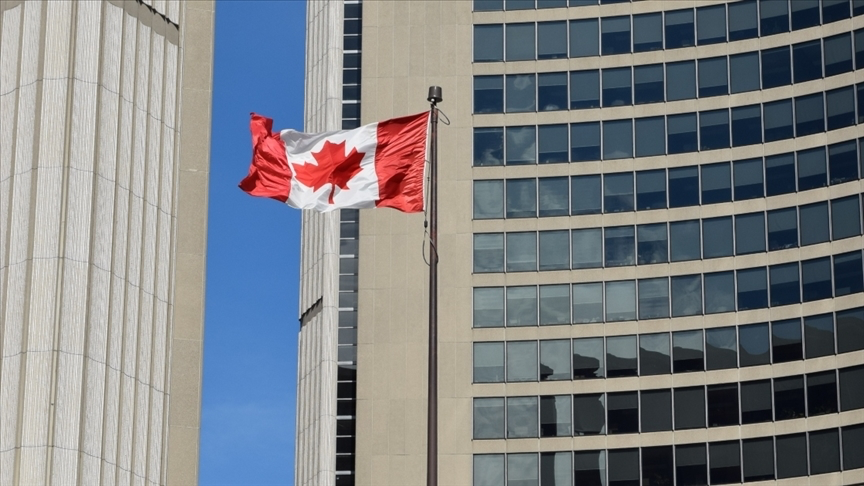
The Canadian government introduced a C$141 billion (≈ USD 100 billion) fiscal package to offset the economic strain from new U.S. trade tariffs and stimulate domestic growth.
Key Components
- C$50 billion for infrastructure projects spanning energy, transport, and renewables.
- C$60 billion in public spending cuts aimed at balancing the fiscal deficit, projected at C$78.3 billion for 2025.
Context
The move follows U.S. President Donald Trump’s renewed tariff threats—particularly on Canadian steel and aluminum—posing significant risks to export-led sectors.
Impact
Economically, the budget aims to buffer Canada against reduced trade flows and declining private investment. Politically, it reflects the government’s determination to maintain economic sovereignty amid growing protectionism.
Senator Cynthia Lummis Advocates for a U.S. Strategic Bitcoin Reserve

Wyoming Senator Cynthia Lummis continues to push for the “BITCOIN Act of 2025”, proposing the creation of a Strategic Bitcoin Reserve (SBR) held under the U.S. Treasury.
Key Provisions
- Establishment of a sovereign Bitcoin reserve using seized or acquired BTC.
- Treasury-held cold storage facilities and public cryptographic attestations for transparency.
- Bitcoin to be treated as a strategic national asset, akin to gold, without increasing public debt.
Rationale and Criticism
Lummis argues that Bitcoin’s finite supply and global recognition make it a viable “digital gold.” However, critics warn of volatility, regulatory complications, and potential conflicts with the decentralized ethos of cryptocurrency. While the bill remains under review, it signals a profound ideological shift—embedding Bitcoin into national financial strategy.
Mastercard, Gemini, and Ripple Partner to Pilot Blockchain-Based Credit Card Payments

Mastercard, in collaboration with Gemini and Ripple, is preparing to pilot blockchain-settled credit card transactions—a milestone toward merging traditional finance with distributed ledger infrastructure.
Pilot Objectives
- Transactions initiated via Mastercard cards will be settled through blockchain networks rather than conventional clearing systems.
- Gemini will manage crypto liquidity and payment processing, while Ripple will power the blockchain infrastructure, likely using its On-Demand Liquidity (ODL) framework.
Significance
The pilot represents a step toward cost-efficient, faster, and globally interoperable payment rails. It also strengthens the fiat–crypto bridge, promoting blockchain adoption within regulated finance.However, scalability, regulatory compliance, and consumer transparency remain key challenges before mainstream implementation.
U.S. Spot Bitcoin ETFs Record $2 Billion in Weekly Outflows

Spot Bitcoin ETFs in the United States witnessed over $2 billion in net outflows during the week of October 27 – November 2, 2025, marking the second-largest withdrawal in ETF history.
Market Interpretation
The exodus was attributed to rising interest rates, a stronger U.S. dollar, and investor risk aversion amid sideways Bitcoin price action.These outflows may constrain liquidity in BTC markets, reflecting growing institutional caution.Despite short-term pressure, analysts note that such volatility underscores Bitcoin’s increasing integration into the broader macroeconomic landscape—where global monetary shifts now directly influence crypto investment flows.
Disclaimer
* Legal Notice 1: This content does not constitute investment advice. It is not intended to promote the buying/selling of digital assets and is for informational purposes only. Crypto assets carry high risks and may be subject to significant price fluctuations. Before making any investment decision, you should assess your own financial situation and make an independent decision.
* Legal Notice 2: The data and charts provided in the article are for general informational purposes only. Although all content is carefully prepared, no responsibility is accepted for possible errors or omissions. The Gate Academy team may translate this content into different languages. No translated article may be copied, reproduced, or distributed without permission.
Share


Sign Up
Related Articles
Intermediate
Spot Crypto ETFs: Global Rise and Turkey’s Roadmap
What are spot crypto ETFs, how do they work, and why are they important? In this comprehensive Turkey-based analysis, we explore global ETF trends, the increasing interest of governments and institutional investors in crypto, regulatory frameworks, and future projections in depth.
2025-11-18 08:29:40


Beginner
The 10 Biggest Crypto Hacks in History
This article takes an in-depth look at the 10 most shocking crypto hack incidents in history. We will explore famous hacker groups, common attack methods,
2025-11-24 10:39:51