

Appropriate indicators and tools combined with crypto news create the best possible fundamental analysis for decision making.
What is Fundamental Analysis of Cryptocurrencies?
Cryptocurrency projects have experienced a boom, especially after 2020, and increasingly diverse and innovative use cases have emerged. However, the crypto market presents both great opportunities and serious risks due to high volatility, uncertainty and fast-changing dynamics.
A solid fundamental analysis model can help traders make more informed and disciplined decisions. Since cryptocurrency investments are characterized by high risk and high return, creating a systematic analysis method is critical for developing an investment strategy.
Volatility in the crypto market is much higher than in traditional financial markets. In traditional exchanges, “limit up-limit down” mechanisms are activated to temporarily halt trading if the price rises above or falls below a certain limit. This system aims to prevent excessive gains or large losses.
In contrast, the cryptocurrency market has no restrictions on price or trading time. They can be traded every minute of the day and prices can fluctuate sharply in a short period of time. This increases the opportunity for big gains, but also opens the door to big losses.
This makes it imperative for investors to develop reliable analysis methods to make the best decisions. While laws and regulations seek to protect investors, fundamental analysis skills are critical to manage market uncertainties. With the right analysis, investors can identify promising projects, minimize risks and make more informed investment decisions.
What is Fundamental Analysis?
In traditional financial markets, investors have to make informed investment decisions by reacting to market changes. In this process, adopting the right analysis methods is critical. In general, analysis methods fall into three categories: fundamental analysis, technical analysis and position cost analysis.
In traditional stock markets, fundamental analysis focuses on assessing a company’s financial position and profitability to determine whether it is worth investing in for the long term. This analysis is carried out through three key financial statements and four key indicators.
The three basic financial statements are:
• The income statement helps to understand whether the company is making a net profit.
• The balance sheet assesses a company’s financial health by presenting its assets and liabilities.
• The cash flow statement shows the liquidity position of the company, allowing us to understand whether its operations are sustainable.
The four main indicators are:
• Earnings Per Share (EPS) shows how much profit the company generates per share.
• The Price-Earnings Ratio (P/E) helps to estimate how long it will take for the investment to reach break-even.
• The Price-to-Book Ratio (P/B) allows the market value of a company to be compared to its accounting value.
• Gross Profit Margin helps determine whether the stock price is fair by measuring the profitability of the company’s operations.
Fundamental Analysis in the Cryptocurrency Market: Differences with Traditional Finance
While companies traded on traditional exchanges provide investors with quarterly financial statements and financial reports approved by regulatory bodies, cryptocurrency projects do not have such a requirement. Therefore, financial indicators such as income statements, balance sheets and cash flow statements are not directly applicable in the crypto market.
The decentralized nature of cryptocurrencies results in the absence of a universal valuation methodology. Moreover, even seemingly credible rumors in the market can be open to manipulation. Traders need to be able to distinguish between unconfirmed news, determine whether the source is reliable and be wary of fake data. For example, news spreading on platforms such as Twitter or Telegram may be unverified, or the increase in the number of active addresses on the blockchain may be due to fake data inflated by artificial transactions.
Therefore, to make investment decisions in the crypto market more informed, one should identify the most appropriate fundamental analysis indicators and tools that integrate with market news.
Below, the three main metrics of cryptocurrency fundamental analysis, three key indicators, analytical tools and methods of evaluating market news will be discussed in detail.
Three Key Metrics
- Metrics on the Chain
On-chain metrics are metrics used to assess market trends by analyzing blockchain data. However, manually collecting a single node’s data is a time-consuming and laborious process. Therefore, traders can access data via websites and APIs (Application Programming Interfaces) specifically designed for analysis.
Number of Transactions
One of the simplest indicators to measure network efficiency is the number of trades. By analyzing transaction activity over a period of time, changes in activity on the blockchain can be observed. However, the number of transactions alone does not provide reliable data. Situations such as the same trader transferring assets between different wallets can artificially increase the number of transactions. Caution should be exercised against such data manipulation.
Transaction Volume
Trading volume refers to the total value of transactions over a certain period of time. Unlike the number of trades, trade volume is calculated by multiplying the total number of trades by the amount of assets moved in each trade. Higher trading volume can indicate that asset mobility on the blockchain is increasing and the market is active.
Active Addresses
Refers to blockchain addresses that are active for a certain period of time. There are several different ways to determine whether an address is active or not. Typically, the total number of addresses that appear as senders and receivers in on-chain transactions is tracked and the total number of active addresses is calculated at regular intervals. An increase in the number of active addresses may indicate that the blockchain is being adopted by more users and transaction traffic is increasing.
Transaction Fee
When blockchain congestion increases, users pay higher transaction fees to speed up their transactions. Conversely, transaction fees fall when there is low demand on the network. The level of transaction fees is a direct indicator of the demand on a given blockchain. As demand increases, the blockchain becomes denser and transaction fees rise. Lower transaction fees generally indicate lower chain activity.
Hash Rate (Computer Power) and Staking Amount
Blockchains use specific consensus mechanisms to secure the network and verify transactions. The most common of these are Proof of Work (PoW) and Proof of Stake (PoS) algorithms.
In the Proof of Work (PoW) mechanism, the hash rate (computational power) directly affects the security of the blockchain. The hash rate refers to the total processing power of mining devices. The higher the hash rate, the more difficult it is to compromise or hack the blockchain. For example, in a scenario known as a 51% attack, attackers would need to control 51% of the network’s total hash power in order to modify data on the blockchain. Therefore, blockchains with a high hash rate are more secure.
In the Proof of Stake (PoS) mechanism, the amount of staking is an important factor determining the security of the network. In the PoS model, block validators have to stake a certain amount of assets in order to participate in transaction confirmations. Changes in the amount of staking can indicate market players’ confidence in network security and which assets the market favors more.
These on-chain metrics help investors and analysts assess the activity and level of security in the cryptocurrency market. However, these indicators should be considered in conjunction with other analysis tools, as they contain data that may be open to manipulation.
- Project Metrics
The project metric is used to evaluate the performance of a project team and the outcome of the project from various perspectives.
Whitepaper
It is similar to a stock prospectus, but focuses more on research and technical information about the project, helping the public understand the project’s operation, vision and initial resource allocation. Specifically, the white paper covers topics such as technology, use cases, roadmap for upgrades or new features, and token supply and distribution.
Project Team
Since most cryptocurrency project teams publish their team members’ information on GitHub, it is quite easy to find this information. GitHub is one of the most widely used open source platforms for developers due to its low cost.
Registered users can upload files and data to their accounts and make them publicly accessible. Therefore, it is possible to study the experience of the members and follow relevant news to understand whether the team has the necessary skills to realize the project or has a negative past.
Competitors
After adequate research on the technical review and the team, comparative analysis with similar projects can be carried out. Competing products and projects can be evaluated on a variety of indicators to analyze the extent to which the project is unique and whether it is easily modifiable.
Tokenomics and Initial Token Distribution
It is necessary to assess whether the tokens have practical use cases, how the cash flow works, and the extent of market adoption. The true value of a token is only revealed when it has an active use case and is recognized by the market.
Another important factor is the initial allocation process. If tokens are to be distributed through an Initial Coin Offering (ICO) or Initial Exchange Offering (IEO), the whitepaper should clearly state the amount set aside for investors, as well as the percentage of tokens held by the founders and the team. If an Initial Model Offer (IMO) method is applied, evidence must be provided to demonstrate that mining will be conducted on the previously released version of the network.
The principle of trust should be considered when evaluating the project metric. Traders often only have to make decisions based on the information provided by the team. Therefore, incomplete or inaccurate disclosures may create potential risks and mislead investors.
- Financial Metrics
Unlike the fundamental analysis tools of traditional finance, which evaluate publicly available information such as trading volume, prices and liquidity, financial metrics in the cryptocurrency market focus more on deals and incentives.
Market Capitalization (Network Value)
Market capitalization is calculated by multiplying the number of tokens in circulation by the token price. This value represents the theoretical total value of a token in the market. For example, if there are 1 million tokens in the market and the price of each token is 1 dollar, the total market capitalization is 1 million dollars. However, the market value can be misleading as this value may have been created entirely from scratch. If a token’s popularity declines over time and demand falls, the token may become worthless.
The amount of tokens in circulation is as important as price fluctuations in calculating market capitalization. Tokens may go out of circulation during transfers, loss or destruction of private keys, etc. Despite this, market capitalization is a widely used indicator to estimate the growth potential of a network.
Some crypto investors believe that tokens with low market capitalization have higher growth potential compared to mainstream crypto assets with large market capitalizations, such as Bitcoin and Ethereum.
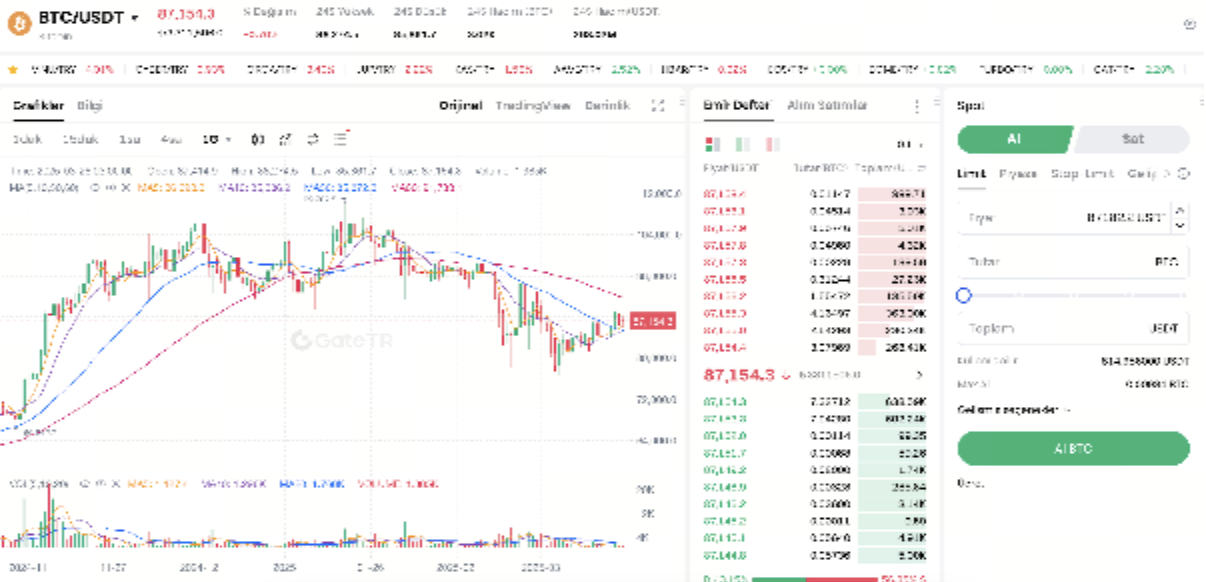
Using Bitcoin’s market capitalization as an example, when the BTC price is $87,154 and the circulating supply is 19,842,421, the total market capitalization is calculated to be approximately $1.7 trillion (87,154 × 19,842,421 BTC \= $1,729,346,359,834).
Liquidity and Trading Volume
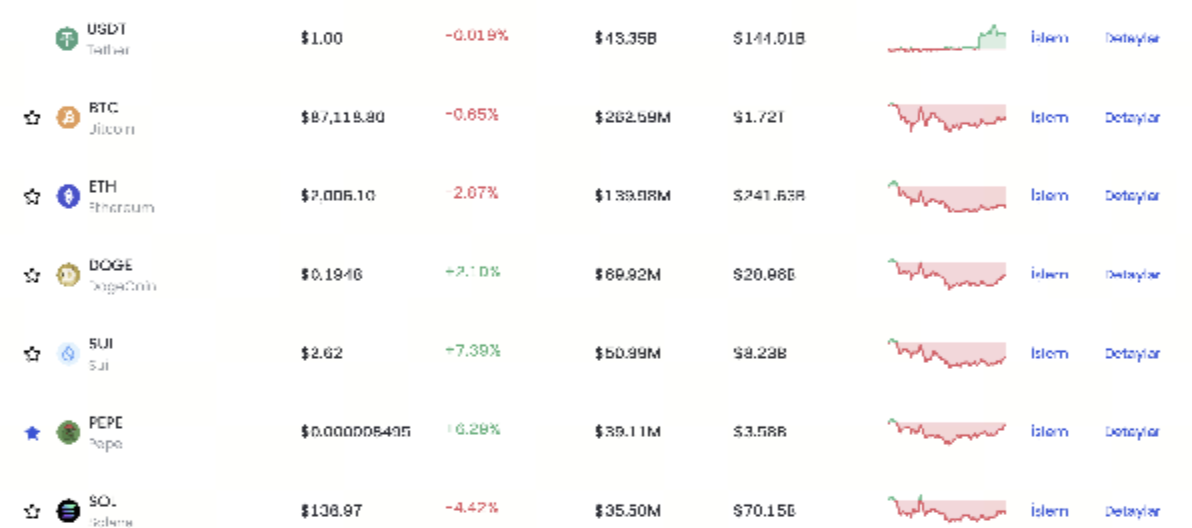
Liquidity refers to how quickly and easily an asset can be bought and sold in the market. In a highly liquid market, assets can be traded quickly at a fair price. But if liquidity is low, it becomes harder to buy and sell an asset at a market-clearing price and price fluctuations become more pronounced.
Trading volume is an important indicator that helps determine liquidity. Charts show how active the market is by recording the volume and value of trades over a given time period. Liquidity also contributes to determining the preferences of market players, making it an important analysis tool for investors.
Supply Mechanism
The money supply mechanism is crucial in determining the economics of a token. The maximum supply, the amount of circulation in the market and the inflation rate have an indirect effect on the price of the token. When token supply increases, but demand remains at the same level, the trading price is likely to fall.
Over time, some projects choose to limit the total supply by reducing the amount of new tokens created. This approach can help maintain the price. Therefore, the token supply should be seen as an important criterion for assessing whether there is unlimited additional token minting. If a project has unlimited supply, this can have a negative impact on the market, leading to inflation and low prices.
Three Key Indicators
Market Value (MC) and Fully Diluted Valuation (FDV)
Assuming that the current market price of a token is 1 dollar, the circulating supply is 1,000 and the maximum supply is 10,000, the FDV and MC calculations can be done as follows:
Fully Diluted Valuation (FDV)
FDV is calculated by multiplying the maximum supply of a token by its current market price.
FDV \= Maximum supply × Current market price
FDV \= 10,000 × 1 \= 10,000
FDV is an indicator used to estimate the future market value of a project. In other words, if the team launches all tokens, FDV shows the value the project could reach at the current price.
1.Market Capitalization (MC)
MC is calculated by multiplying the number of tokens in circulation by the current market price.
MC \= Circulating supply × Current market price
MC \= 1.000 × 1 \= 1.000
MC represents the current market capitalization of a blockchain project. This calculation only includes the value of tokens traded on the market and does not include locked tokens.
The most obvious difference between FDV and MC is that FDV includes the total potential value of all tokens, while MC only includes tokens in circulation. MC can be used as an indicator to measure market demand. It can be thought of as a supply metric, because as more locked tokens are released, if market demand increases, the price can rise and the FDV grows proportionally.
For example, assuming that $250,000 is raised with an FDV of 5 million, and post listing 5% FDVs are sold, if the circulating supply is 1 and the market capitalization is $1 million, the FDV actually reaches $100 million. When early investors earn 20 times returns, there can be serious selling pressure when tokens are unlocked. Therefore, it is illogical for the FDV to be greater than the MC during unlocking, as this can lead to large sales and price drops.
Since most DeFi projects are established through funding, the price usually drops when token unlocks. This is a key factor explaining why the DeFi market has performed worse compared to the overall crypto market over the past year.
2.Total Value Locked (TVL)
TVL is a metric that indicates the total amount of tokens locked in the capital pool and refers to the liquid assets of DeFi protocols. The higher the TVL, the higher the amount of funds raised for the project and the higher the potential of the project. By tracking changes in the TVL, information can be obtained from platforms such as DeFi Llama about entries and exits to and from locked DeFi protocols.
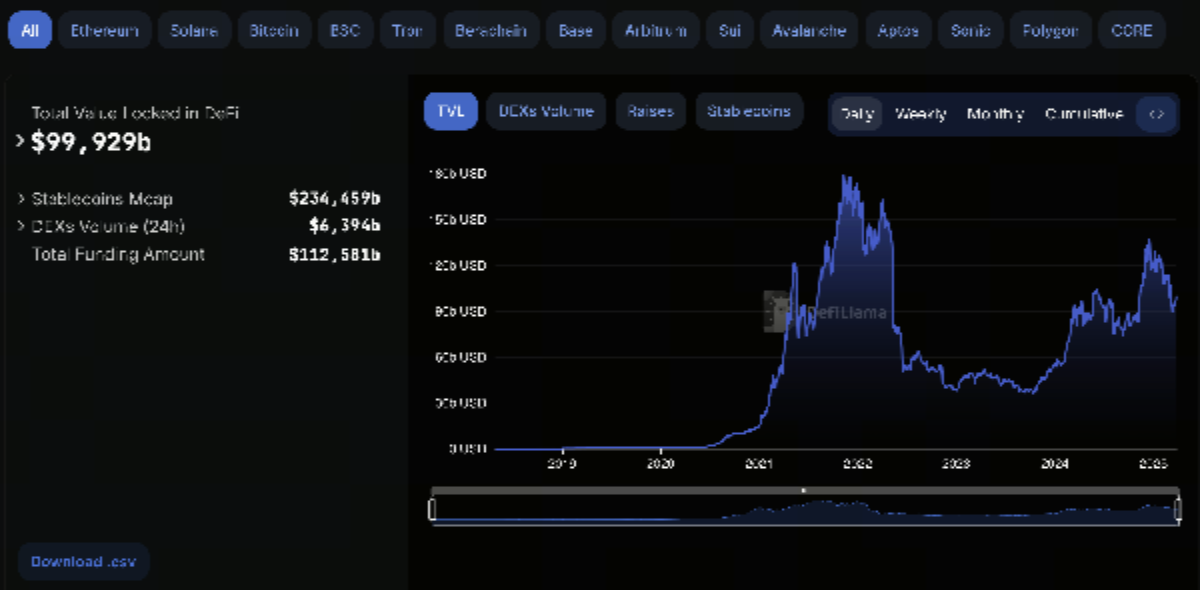
Source: Defillama.com
Three commonly used TVL indicators:
• Total Locked Value (TVL): The higher the TVL, the greater the reliability and size of the DeFi protocol.
• Market Cap (Mcap) / TVL: The lower the ratio, the higher the growth potential of the market is considered.
• Trading Volume (VOL) / TVL: The higher the ratio, the stronger the returns and the economic activity of the protocol.
Protocol Revenue (Profitability)
Protocol revenue is the portion of the total fees paid by users that goes directly to token holders or governance mechanisms. This revenue model is an important indicator for understanding the sustainability of a blockchain or DeFi protocol.
High protocol revenue usually indicates that the project is actively used and has a strong ecosystem. But each project distributes this revenue in different ways. Some protocols transfer revenue directly to token holders, while others may direct it to liquidity providers or a fund for the development of the ecosystem.
Fundamental Analysis Tools
Etherscan
All transactions on the blockchain can be controlled by anyone in a transparent and traceable way. Blockchain scanners are used to track these transactions. The most widely used blockchain scanner for the Ethereum network is Etherscan.
Etherscan shows every transaction on the Ethereum blockchain in detail, allowing you to analyze fund flows, transaction history and smart contract data. This tool plays a critical role for investors to assess the transparency of a project and track activity on the network.
Example: SHIBA INU Token Analysis
On Etherscan we can see the following information about the SHIBA INU token:
• Token allocation
• Wallet addresses of the owners
• Total token supply
• Total number of token holders
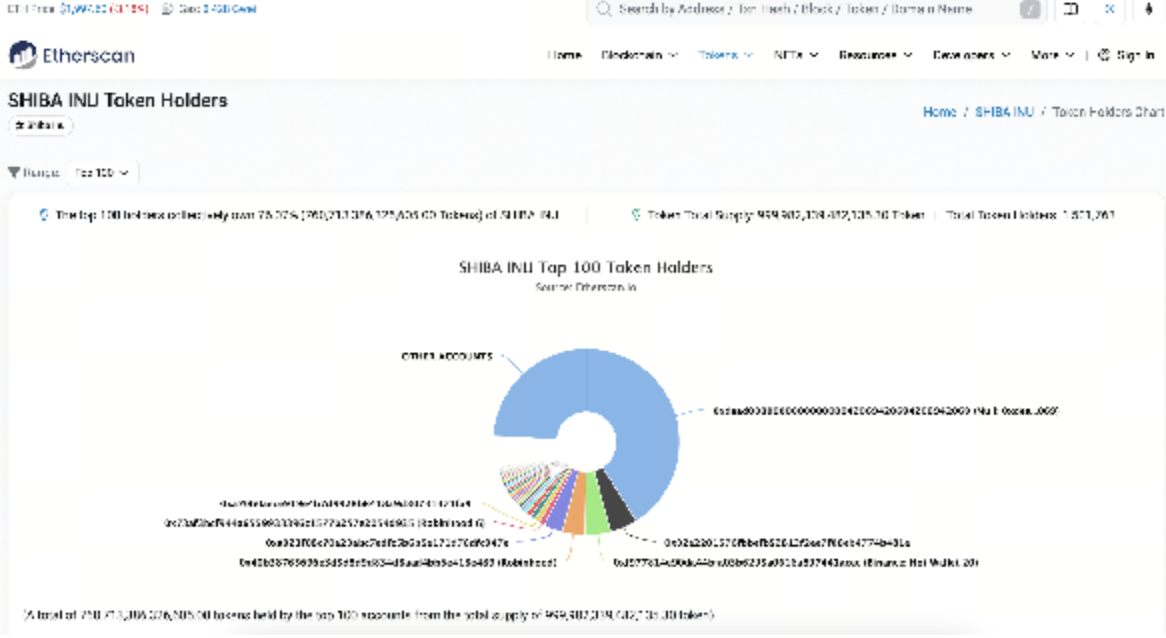
Source: Etherscan
Such data can be used to analyze factors such as the distribution of a token, its centrality and the presence of large investors. This allows investors to assess how token ownership is distributed and how whale accounts may affect the market.
Token Terminal
Token Terminal standardizes cryptocurrency data with reference to traditional financial exchange indicators, allowing traders to easily examine the value of different blockchains and decentralized applications. Metrics currently available on Token Terminal include total market capitalization, circulating market capitalization, price-to-sales ratio, price-to-earnings ratio, token trading volume, total locked value, total commodity volume, revenue, protocol (token holder) revenue, costs and expenses, and total revenue.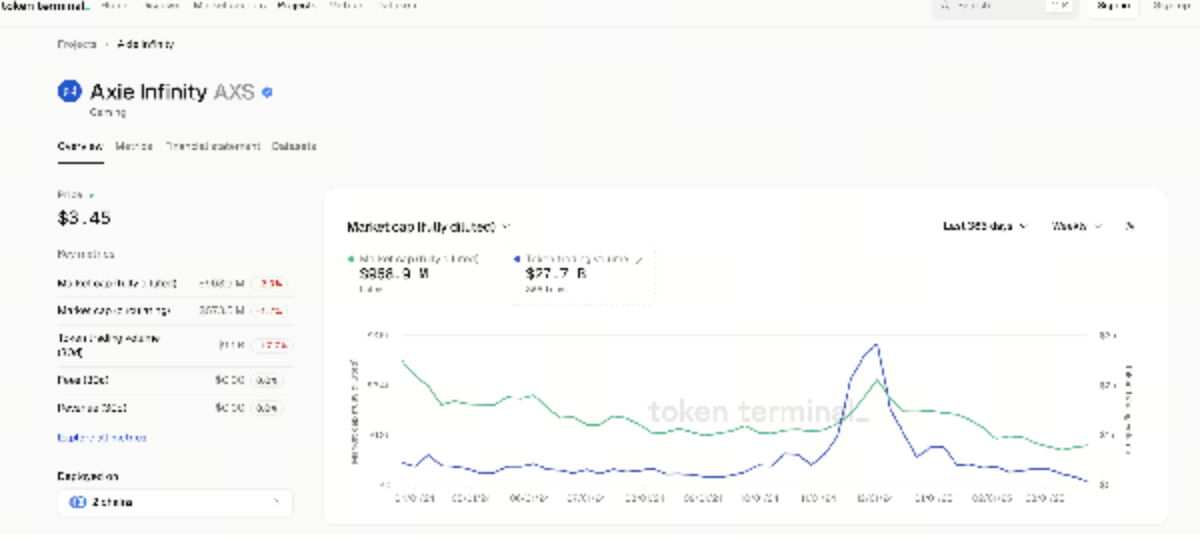
Source: Token Terminal
The platform offers original and downloadable project data, allowing users to perform fast and accurate data analysis with filtering and multi-view functions. As in the case of Axie Infinity, traders can perform competitive analysis, data evaluation and various metrics. They can examine different metrics such as total market capitalization, circulating market capitalization, price-to-earnings ratio, and token trading volume to make comparisons with similar projects.
Dune Analytics
Dune Analytics is a free and powerful blockchain analytics platform where you can extract data from the Ethereum blockchain using SQL, copy other people’s SQL queries or search for a token directly. It allows you to create visual graphs with data, simplifies the data search process and provides an easy-to-use interface, allowing you to get visualized results.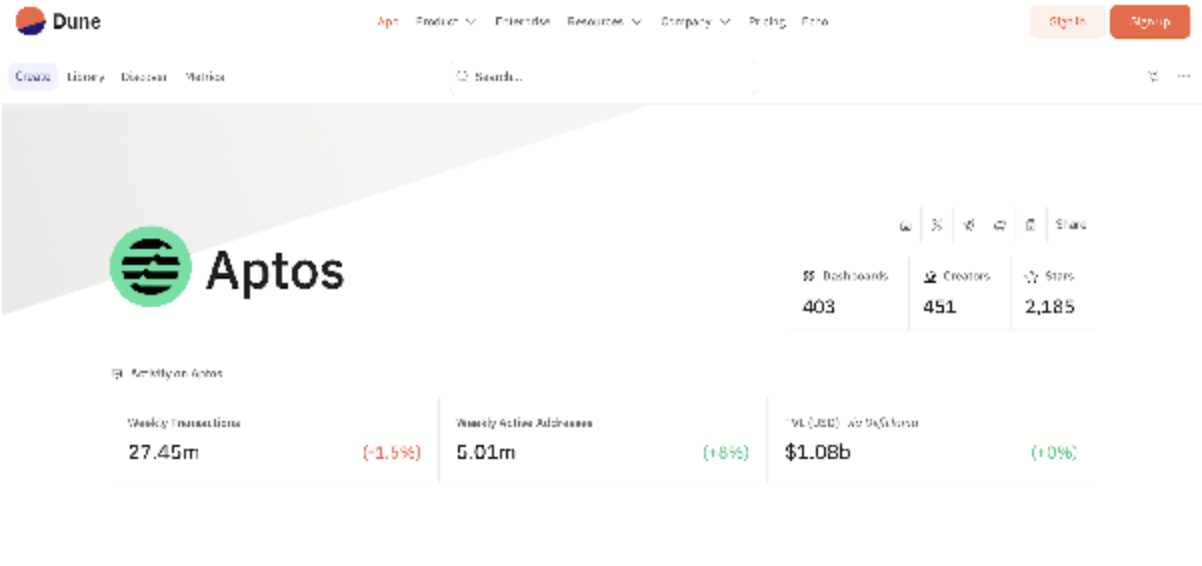
Source: Dune
Market News
It refers to various news that affects the market positively or negatively. The general environment in the real economic market affects not only the stock market, but also the cryptocurrency due to the exchange of financial flows. Factors affecting economic dynamics in the crypto market include large-scale upgrades, exchange listings and contract deficits.
One of the most remarkable events in the crypto world is the Bitcoin Halving Cycle, which happens every four years. Each halving becomes an important indicator for the whole market, starting the process of forming a new bottom.
The Four-Year Bitcoin Halving Cycle:
• The launch of Bitcoin: January 3, 2009 - Block reward: 50 BTC
• First halving: November 28, 2012 - Block reward: 25 BTC
• Second halving: July 9, 2016 - Block reward: 12.5 BTC
• Third halving: May 12, 2020 - Block reward: 6.25 BTC
• Fourth halving: April 20, 2024 - Block reward: 3,125 BTC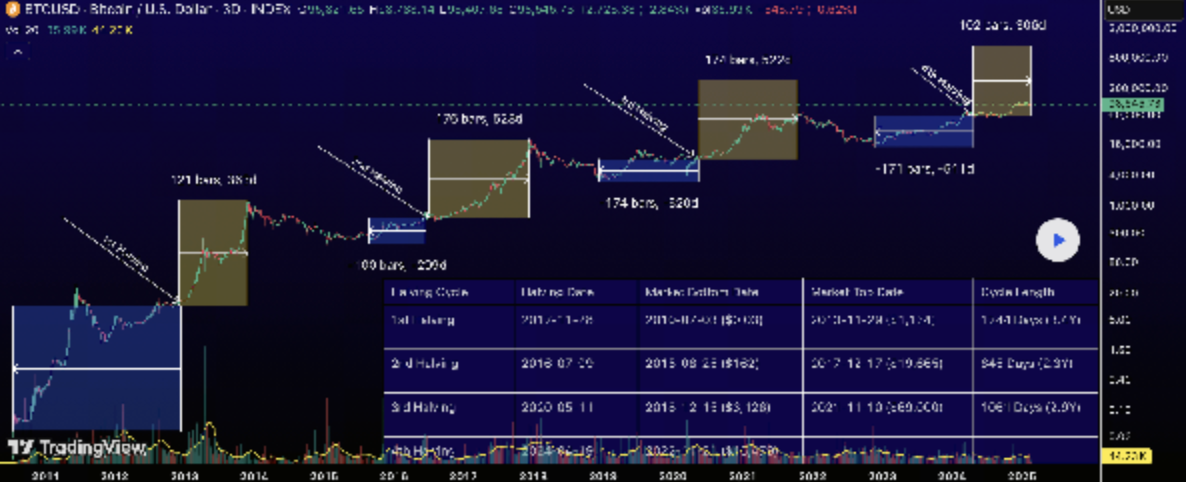
Source: TradingView
Exchange Balance
In general, large-scale sell-offs are less likely to occur in a bull market. Most whale traders holding large amounts of funds store their assets in cold wallets to ensure safety.
In a bear market, whale investors may sell large amounts of their holdings to avoid losses. During this period, rising balances in the stock markets could be seen as a possible sell signal, which could cause the price to fall.
Whale Wallet Transaction History
One of the most direct ways to query whale wallet transactions is to use data collection and analysis platforms such as Whale Alert. Such websites allow you to track large transactions with different cryptocurrencies and see which assets are the subject of large transfers.
However, this data is only an indication to predict future market trends and should not be considered as direct investment advice.
Source: Whale Alert
Pros and Cons of Cryptocurrency Fundamental Analysis
Pros:
• It helps to identify the turning point of the market when the trend changes.
• It makes it easy to grasp real-time information and trend changes instantly.
• Contributes to the identification of appropriate investment targets.
• It helps to avoid irrational selling caused by panic.
Cons
• The data may have been manipulated.
• Distinguishing reliable information can be difficult due to a lack of standardized and comprehensive promotion.
• Some information provided by the project team may be incomplete or misleading.
• Data collection and analysis can be time-consuming and labor-intensive.
Conclusion
Fundamental analysis tools developed for traditional financial markets are no longer sufficient for the rapidly changing crypto market. In response, various tools have been created to help analyze cryptocurrencies. Thanks to the open nature of the blockchain, all transactions are recorded and made public. However, the use of these tools is still subject to different practices and the data collection process is not fully standardized.
The data sources of analytics platforms may not always be precise. With crypto traders scattered around the world, news can spread quickly and sometimes be fake, creating a regulatory vacuum. It is also very difficult to resolve potential disputes through litigation.
Currently, there are no sophisticated data models and evaluation criteria for fundamental analysis of cryptocurrencies as there are in traditional finance. There is still considerable room for improvement of analysis tools. However, by examining a project’s fundamental data and using better analytical models, investors can make more informed investment decisions with high profitability potential. Therefore, fundamental analysis is still an important evaluation method.
Cryptocurrency projects have proliferated rapidly, especially after 2020, and more diverse and innovative use cases have emerged. However, the crypto market is prone to great volatility and presents both risks and opportunities. Building your own fundamental analysis model can help you make your investment decisions in a more disciplined way. Given the high risk and high return potential of crypto investing, a well-designed analysis model will make your investment strategy more robust.
Share
Content
What is Fundamental Analysis of Cryptocurrencies?
What is Fundamental Analysis?
Fundamental Analysis in the Cryptocurrency Market: Differences with Traditional Finance
Three Key Metrics
Three Key Indicators
2.Total Value Locked (TVL)
Fundamental Analysis Tools
Market News
Pros and Cons of Cryptocurrency Fundamental Analysis
Conclusion


Sign Up
Related Articles



Beginner
How to Avoid Recovery Sentence Scams
This Gate Learn article explains how to protect yourself from seed phrase scams by highlighting five key factors to consider when investing and storing your crypto assets.
2025-11-24 11:28:44